You’ve probably heard the rumors: “SEO is dead.” It’s easy to feel like the digital landscape is crumbling, especially with the sudden rise of AI tools changing how people search online.
If you’re a business owner, you might be worried that your marketing budget is going to waste or that you’re suddenly invisible to your customers.
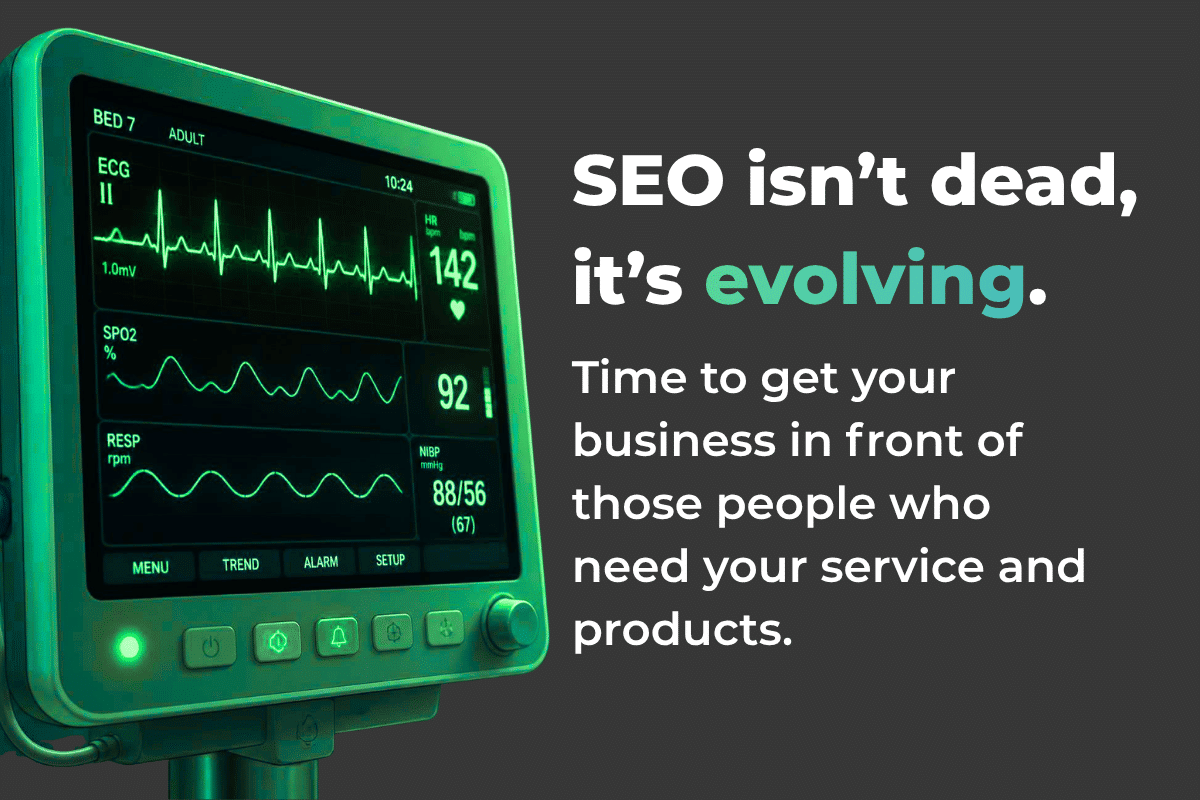
Let’s clear the air: SEO isn’t dead. It’s simply evolving.
Whether people call it “SEO” (Search Engine Optimisation) or “GEO” (Generative Engine Optimisation), the goal remains exactly the same: getting your business in front of the people who need your services.
It’s all about the answer
Google and other search tools are essentially giant machines designed to find the best possible answer to a user’s question. They haven’t changed their goal; they’ve just got better at finding the right information.
When you create high-quality, helpful content, you aren’t “writing for a robot”, you are answering a question for a human.
If your content is genuinely useful, AI tools will naturally cite it as a reliable source.
Here is the simple truth: If you write for your customers, you are already writing for AI.
How to win in the new search landscape
You don’t need to learn complex technical tricks to succeed. You just need to return to basics:
Answer the questions you already hear
What do your customers ask you during sales calls? If you hear a question once, write it down. If you hear it twice, write an article about it. That is your best content strategy.
Use the data you already have
Log into your Google Search Console to see what people are already searching for to find your site. Answer those specific questions better than anyone else.
See what the competition is doing
Type a question into Google. Look at the ‘People Also Asked’ section. Those are the questions your customers are looking for answers to.
Don’t just think about your website
Search engines are now indexing social media profiles and videos too. If you post a helpful video on social media, make sure your bio is clear and your captions answer real questions. It’s another way for customers to find you.
A word of warning
AI is a great research assistant, but it’s a poor substitute for your voice. Google values original human perspective. Use AI to brainstorm, but write the final version yourself. Your customers are buying you, not a robot’s summary.
Link to your own services
Every time you write a helpful answer, gently guide the reader to the next step. If your post helps them understand a problem, include a link to your service page where you solve that problem for them.
Try the Friday Afternoon Audit
Spend 30 minutes every Friday looking at the last 5 emails you sent to clients or prospects. Which questions did you answer? Which problems did you solve?
Those 5 emails are the raw material for your next 5 blog posts.
You aren’t writing “content”, you’re just documenting the expertise you already share every day.
Remember: Humans come first
Google is very clear: they don’t want content written solely for machines. They want content written for people.
Quality beats quantity
One excellent, original article is worth more than ten generic, AI-generated blog posts.
Understand what it is your user is trying to achieve with a search
Think about what your customer is really trying to achieve when they search for you. Are they looking for advice? A product comparison? A fix for a problem? Give them exactly what they need.
Think about it this way: If a customer searches for “how to choose an accountant,” they are in the research phase, they may want a detailed guide.
If they search “best accounting software for small business,” they are making a decision, they want a comparison or a review.
If your article provides a comparison when they just wanted a guide on “how-to” do soemthing, you’ve missed the mark.
Always ask: “What does this person actually need to do right now?”
Talk to us at TJ Creative
The digital world is changing, but the principles of good business, honesty, expertise, and helpfulness, never go out of style.
If you’re feeling unsure about your strategy or just want a second opinion on how to reach your customers online, we’re here to help. Fill in our form below and we’ll give you a hand!