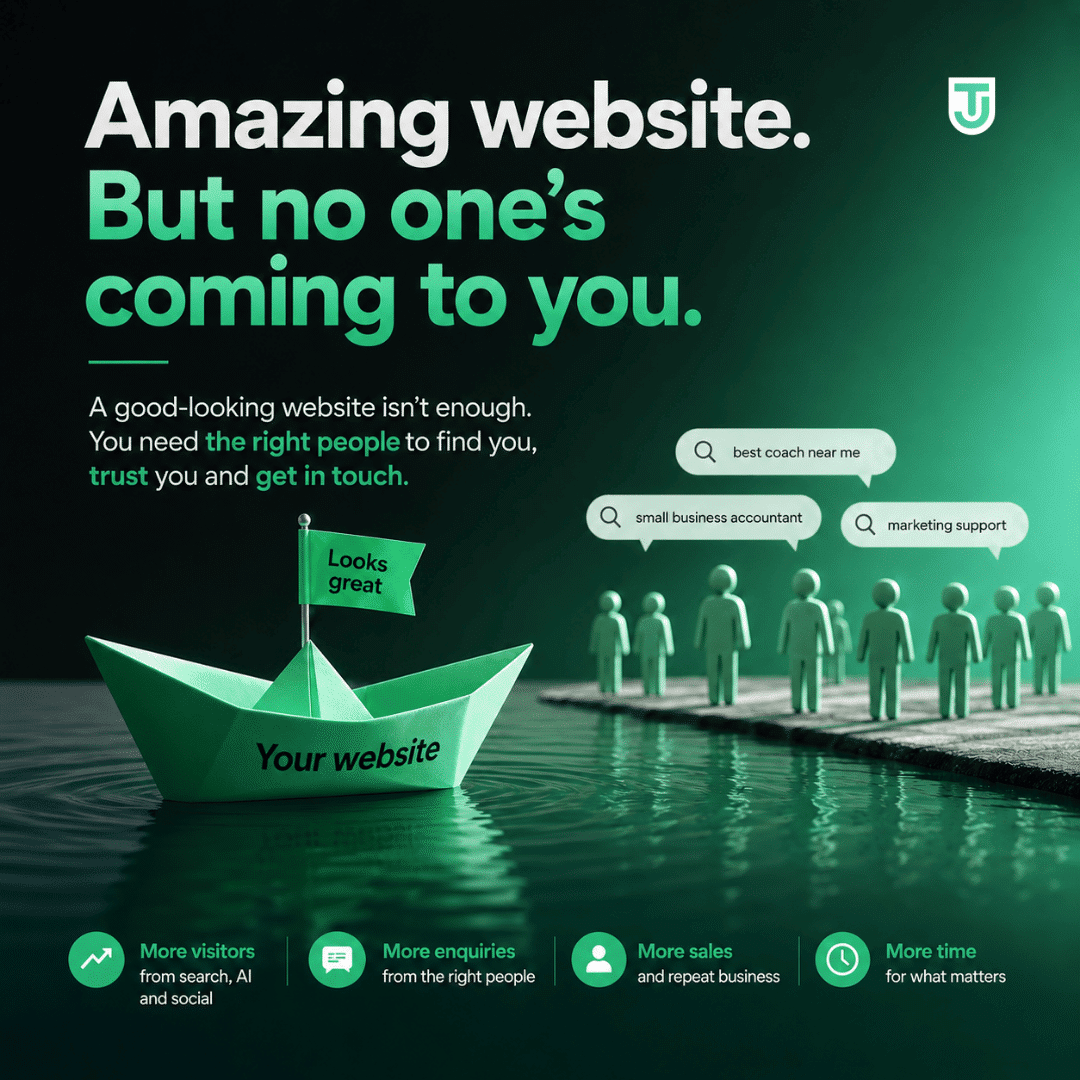
I’ve heard it so many times before – business owner: “I have an amazing website now, but it’s made no difference. No one is coming to my website.”
Well yeah, because you’ve not thought about how you’re going to market it.
You can’t expect customers to magically find your new website. If they search for the services or products you offer and it’s your competitors they find instead, how are they ever going to find you?
Ok, so if this is you, it’s not the end of the world. It just means we need to get cracking RIGHT NOW with your marketing plan.
And working out what that looks like is actually pretty simple if we do it together.
I have a few questions for you that will help us figure out what type of marketing your business actually needs.
And no, we’re not going to base it on what I think you should be doing. Or what you’ve heard you should be doing.
There’s a much better place to start: Your customers.
Working out what marketing you need to do
Ok so we’re not officially partners yet, but you’re here reading my words, so now’s a good time as any to start working together.
If people are searching for what you do, start with SEO
For a lot of businesses I work with, this is where I’d put the majority of the focus.
Why?
Because search gives you the opportunity to get your business in front of someone who is actively looking for what you sell.
And search doesn’t just mean Google anymore.
Your customers might search on Google or Bing. They might ask ChatGPT to recommend a business. They could use Copilot to research their options or Claude to help them understand something before making a purchase.
The way people search is changing, but the opportunity for your business is much the same.
Someone is looking for something. You want your business to be there when they look.
There’s a big difference between someone scrolling past an advert and someone actively searching for:
- “Kitchen company near me”
- “Accountant for small business”
- “Emergency plumber”
- “Nursery in Tooting”
Or asking an AI assistant:
- “What should I look for when choosing a nursery?”
- “How much should I expect to pay to have my house rewired?”
- “What type of accountant do I need for my limited company?”
These people have a need. Your job (and ours!) is to make sure your business is visible when they start looking for the answer.
That’s what good SEO and organic search marketing is really about.
So what would we actually do with your website?
First, we’d work out what your potential customers are searching for.
But we’d also look at the questions they’re asking.
Because that’s becoming increasingly important.
People don’t always search using two or three words anymore, they ask detailed questions. They compare businesses, they research costs, they look for recommendations – they want to understand their options before making a decision.
And they’re doing that across Google, Bing and AI search tools such as ChatGPT and Copilot.
So we’re not going to create a massive spreadsheet of keywords and start stuffing them into your website.
We’re going to understand what your customers actually want to know.
- What services are they looking for?
- What questions are they asking?
- What problems are they trying to solve?
- What are they comparing?
- What concerns do they have before spending their money?
- What would make them choose you?
Then we look at your website and ask:
Are you giving them the best possible answer?
If not, that’s where we start.
That could mean:
- Improving your service pages.
- Creating pages for important services you’ve barely mentioned.
- Building useful location pages.
- Answering common customer questions.
- Publishing genuinely helpful articles.
- Showing examples of your work.
- Adding customer reviews, expertise and evidence that backs up what you’re saying.
We’re creating a website that gives search engines and AI platforms plenty of useful information about who you are, what you do, where you do it and why your business is worth recommending.
But, more importantly, we’re creating a website that’s genuinely useful to your potential customers.
Feel free to read more about our SEO process.
Whichever route you choose, you’re going to need good content
This is the bit that connects everything together:
- SEO needs content.
- AI search needs content.
- Social media needs content.
- Paid advertising needs content.
- Your website needs content.
But creating “content” doesn’t mean publishing hundreds of generic AI-written blogs because someone told you more content equals more traffic.
Quite the opposite.
I’d rather you create one genuinely useful piece of content than ten articles that say absolutely nothing.
Think about what your business knows that your customers don’t:
- Answer the questions you hear on sales calls.
- Explain how much things cost.
- Talk about the choices customers need to make.
- Show examples of your work.
- Share what you’ve learnt.
- Explain common mistakes.
- Give your opinion based on actual experience.
- Show why someone should trust you.
That’s the sort of information that can help you appear in traditional search results, give AI platforms something useful to understand and reference, provide material for your social channels and, most importantly, help a potential customer decide that you’re the business for them.
Quality content gives people a reason to find you, trust you and choose you.
What should you actually spend your marketing budget on?
If you’re sitting there thinking, “That’s great Tom, but which one do I actually need?”, here’s where I’d start:
If people are already searching for what you do: invest in SEO and organic search.
We want your business appearing wherever those searches are happening – Google, Bing and, increasingly, AI-powered search and assistants.
If you need opportunities more quickly: consider paid advertising alongside SEO.
Paid marketing can get you in front of potential customers now while you’re building your longer-term organic visibility.
If customers need to see your work, get to know you or regularly hear from you before they’re ready to buy: social media should probably be part of the plan.
For many businesses, the answer will be a mixture, but that doesn’t mean doing everything at once.
I’d much rather see you become really visible in the places that matter than spread your budget across every marketing channel going.
Your website isn’t the finish line
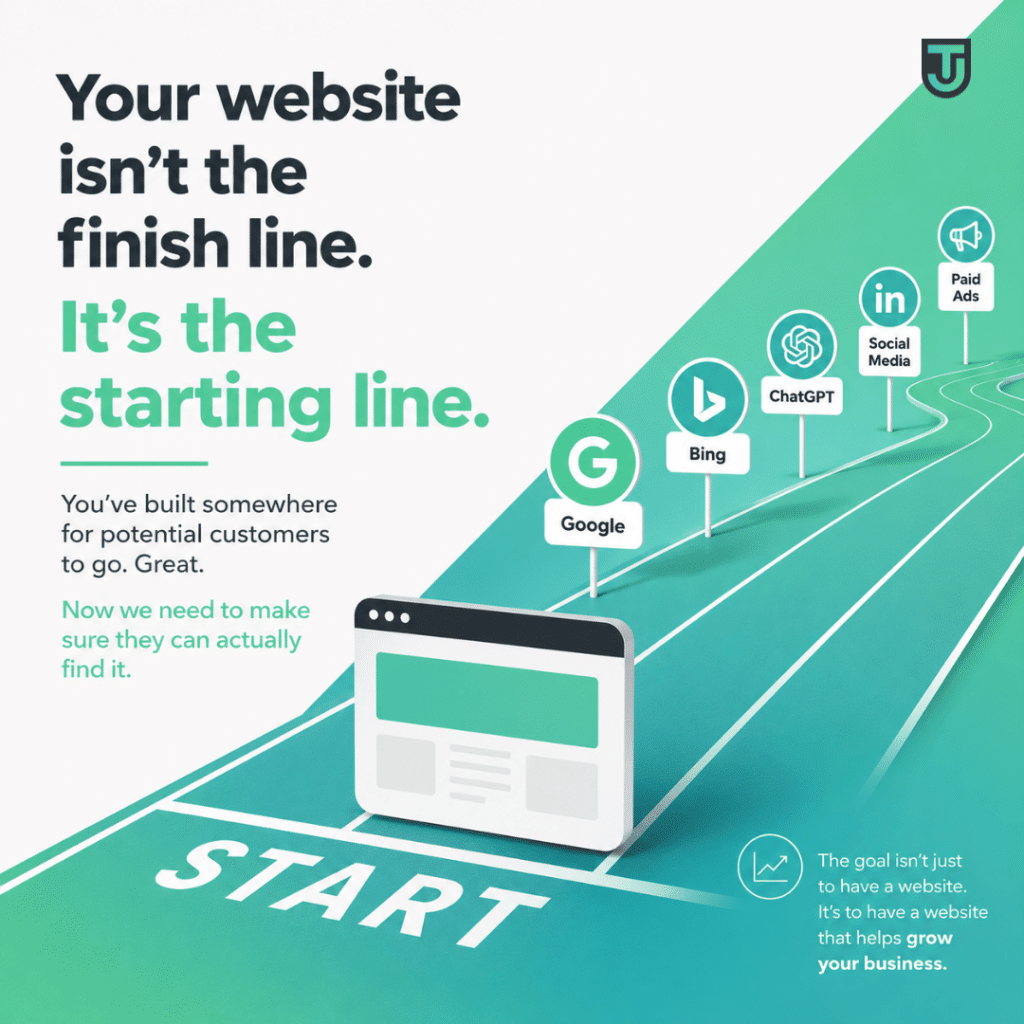
Launching your website wasn’t the end of your marketing.
It was the start.
You’ve built somewhere for potential customers to go. Great. Now we need to make sure they can actually find it.
And increasingly, that doesn’t just mean ranking your website on Google.
It means building a business that’s visible when people search, ask questions, compare their options and look for recommendations across the web.
Google. Bing. ChatGPT. Copilot. Social media. Wherever your customers are looking.
We don’t need to chase every platform.
We need to understand where your customers are and make sure you’re there too.
For a lot of businesses, organic search will be the foundation. Then we can use paid advertising, social media and other channels where they make sense.
But whichever route we take, the principle stays exactly the same:
Get your business in front of the right people. Give them something worth paying attention to. And give them a reason to choose you.
That’s when your nice new website starts becoming something much more useful.
A website that actually helps grow your business.
Enjoyed teaming up so far? Let’s chat
Drop me an email. Let me know your name, business name, website address, and marketing budget. I’ll then come back with my recommended plan to get your website brimming with visitors, enquiries and sales. Email: tom@tjcreative.co.uk

Professionally Certified Digital Marketer, Tom Blake, founded his content agency, TJ Creative Marketing Limited, back in 2017. Tom has worked with the likes of Sony Music, BSM, and Checkatrade. Tom’s speciality lies within creative strategy, digital content and user experience. Drop him a message with any questions about your content or digital marketing.